
A Game-Changer in Neurosurgery: AI’s Role in a Historic Brain Tumor Removal
August 28, 2026 · by · 3 min read · 3 views
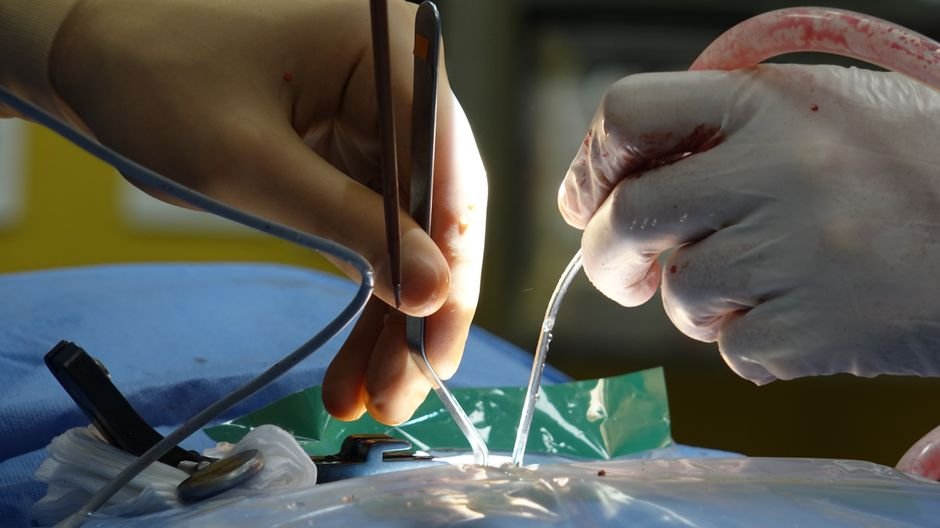
Neurosurgeons in London have performed the world’s first AI-assisted operation to remove a brain tumour, saving a patient’s sight. This groundbreaking procedure marks a watershed moment in medical history, demonstrating how artificial intelligence can enhance surgical precision in procedures where even the smallest mistakes can have catastrophic consequences.
Rhys Hibbert, 48, from Bedfordshire, was the first patient at UCLH to undergo surgery supported by the AI system, which runs on an NVIDIA Clara IGX platform designed to support real-time AI in medical device settings. Hibbert was diagnosed in December 2024 when he collapsed during a walk and suffered a seizure. His symptoms worsened over time, including severe hormone imbalance and vision problems. Without surgery, Hibbert’s tumour would have continued to threaten his sight and could ultimately have led to blindness. Instead of waiting passively, Hibbert opted for surgery and volunteered to take part in research. His willingness to become the first test subject demonstrates remarkable courage and reflects his understanding that medical progress depends on patient participation.
What makes this surgery particularly remarkable is the technical challenge it presents. The pituitary gland (the size of a marble), blood vessels and nerves controlling vision are tightly packed together, and going a millimetre wrong can make a critical difference and lead to death, blindness or stroke. This environment demands exceptional precision, as surgeons must remove as much of the tumor as possible while protecting these vital structures from damage. Traditional approaches relied entirely on pre-operative imaging and the surgeon’s judgment during the operation—an approach that, while effective, carries inherent risks.
The AI system changed this equation fundamentally. During his operation, the UCL-developed AI analysed the live surgical video feed in real time, rather than using pre-surgery scans, to help the surgical team make more precise decisions by highlighting critical structures at the base of the brain. The AI system was developed in-house at the UCL Hawkes Institute, a multidisciplinary research group at UCL focused on advancing healthcare technologies. Rather than relying solely on pre-operative scans taken before surgery began, the technology provided continuous, real-time visual guidance throughout the procedure.
Understanding how the system works reveals its elegant sophistication. The AI supported the surgical team helping identify risky areas to avoid while removing as much tumour as safely possible. It also has the potential to track surgical instruments and instrument–tissue interactions, with the aim of supporting surgeons during complex procedures and providing feedback. Importantly, the significance lies in the possibility of giving surgeons a real-time, machine-assisted view of anatomy that may otherwise be hidden from them. The system served as an additional set of eyes, trained through exposure to hundreds of surgical examples.
The outcome for Hibbert exceeded expectations. “When I opened my eyes after the operation it felt like I had got 360-degree vision – I hadn’t seen that clearly for a year,” Hibbert told the BBC. This dramatic restoration of vision underscores not only the surgery’s technical success but also the profound impact on his quality of life.
Perhaps most importantly, AI didn’t “perform” brain surgery. It didn’t. The significance lies in the possibility of giving surgeons a real-time, machine-assisted view of anatomy that may otherwise be hidden from them. The surgeon remained firmly in control, with the AI offering guidance rather than making decisions. If the results hold up, future surgeons could have something that Hibbert’s team hopes will feel less like replacing human expertise and more like adding another expert to the room—one capable of watching every frame of the operation without ever looking away. As medical technology continues to evolve, this historic procedure hints at a future where artificial intelligence and human expertise combine to transform patient outcomes and push the boundaries of what’s medically possible.

Contributor at AskQustion.




Leave a Comment