
The Hidden Anchors of Antarctica: How AI Discovered 39,619 Tiny Icebergs That Shape Polar Climate
September 13, 2026 · by · 4 min read · 12 views
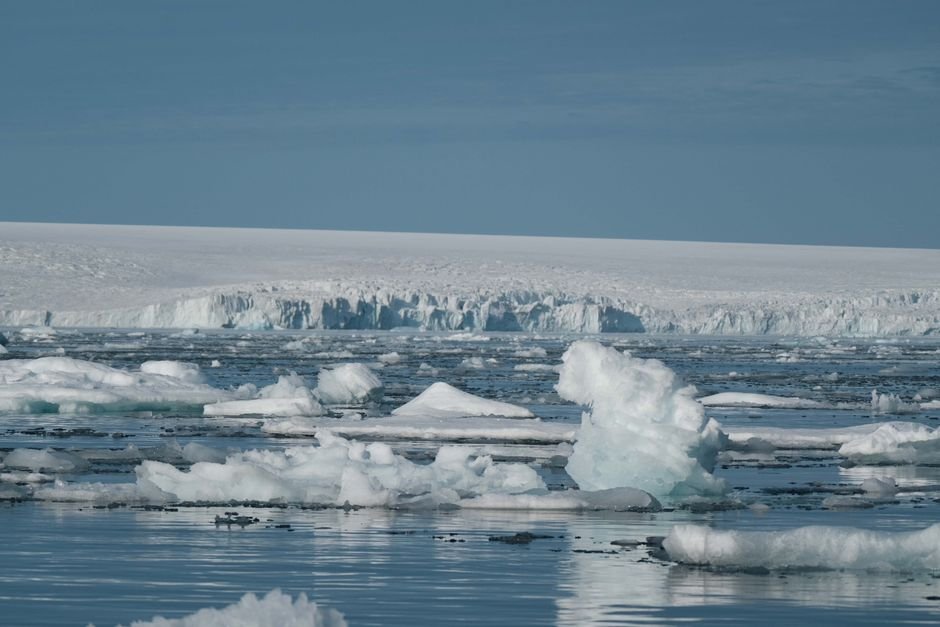
Researchers using artificial intelligence have identified 39,619 stationary icebergs around Antarctica, collectively occupying 13,430 square kilometers. This marks the first comprehensive mapping of these icebergs at continental scale—a breakthrough that reveals how millions of small, previously undetected formations play a crucial role in Antarctic coastal stability and climate systems.
Until recently, this inventory didn’t exist. Iceberg tracking relied exclusively on labor-intensive manual analysis, making continent-wide surveys impractical. The new AI-driven approach has transformed what was possible, opening a window into a part of Antarctica’s system that scientists barely understood.
What Grounded Icebergs Do
Grounded icebergs are large icebergs that frequently run aground on the seafloor around Antarctica, keeping them stationary for days to decades. Rather than drifting away, they become immobilized—wedged on continental shelves and shallow areas around the continent.
Once locked in place, these formations perform essential ecological and physical work. They can anchor landfast sea ice, and their supply of limiting trace nutrients contribute to driving coastal marine productivity. In effect, grounded icebergs act as underwater anchors that stabilize the sea ice above them, which in turn provides critical habitat for marine life and helps regulate ocean chemistry.
These formations are distributed along 57 percent of the Antarctic coastline, with a highly concentrated distribution pattern—but the clustering is extreme. Just 14 percent of the coast contains the majority of all grounded icebergs, creating dense chains of frozen anchors in specific regions.
The Surprising Dominance of Tiny Icebergs
The most striking finding concerns the ones scientists had always overlooked: the smallest icebergs. Tiny icebergs accounted for 93% of all grounded icebergs and contributed 54% of the total grounded area. These are formations smaller than one square kilometer—so small they were essentially invisible to traditional monitoring methods.
This matters because detection required technological leaps. Using satellite imagery from Sentinel-1 combined with a differentiation tool, researchers successfully reduced the minimum detectable iceberg size to 1.6 hectares (4 acres). Previous approaches couldn’t identify objects this small, which meant nearly all of the actual count went unmapped.
How AI Solved the Problem
The study was led by Kaihong Jiao at the University of Tasmania alongside teams from the Institute for Marine and Antarctic Studies, the Australian Antarctic Division, and Geoscience Australia. The team developed an automated detection system that processes radar satellite data using deep learning.
A ResUNet deep learning framework was developed to achieve automatic detection and precise segmentation of icebergs around Antarctica, successfully identifying icebergs ranging down to 0.016 km². The system analyzed Sentinel-1 synthetic aperture radar imagery—microwave-based satellite data that works in darkness and through clouds, making it ideal for Antarctic conditions.
The algorithm incorporated multiple constraints to minimize false positives. Multi-temporal image analysis combined with feature-based matching algorithms was then applied to identify grounded icebergs and monitor their temporal stability, distinguishing between icebergs actually resting on the seafloor versus those temporarily frozen in place by surrounding sea ice.
Climate Vulnerability Hidden in the Small Ones
The abundance of tiny icebergs introduces a new climate vulnerability. Smaller grounded icebergs exhibit greater sensitivity to ocean warming and are more likely to melt or shift position compared to their larger counterparts. This dynamic suggests that even moderate temperature increases could trigger rapid ungrounding events, potentially causing sudden destabilization of regional sea ice and altering coastal ice stability.
This represents a kind of hidden tipping point. The Antarctic coastal system shows a unique sensitivity to climate change, where tiny icebergs are more susceptible to melting and subsequent ungrounding in response to ocean warming than larger ones—which could trigger abrupt changes in the stability of landfast ice. Warming doesn’t just melt icebergs gradually; it can cause them to lose their grip on the seafloor, cascading across the system.
What Comes Next
The discovery has immediate research applications. These dense clusters imply a potential “picket fence effect”, providing a quantitative baseline for modelling fast ice stability, assessing nutrient fluxes, and mapping benthic habitats. In other words, the thousands of small icebergs line up along the coast like a fence of anchors, and now scientists can model how they collectively function.
Most of the simulated landfast sea ice depends on grounded icebergs for support. These results provide a practical way to improve climate models without harming their broader sea ice performance. The dataset will help refine predictions of how Antarctic coastal systems will respond to future warming.
For the first time, researchers have a complete picture of a previously invisible ecosystem component—one that turns out to be far more numerous and consequential than anyone realized.

Contributor at AskQustion.




Leave a Comment