
When Spring and Fall Turn Deadly: Extreme Heat Is No Longer Confined to Summer
September 14, 2026 · by · 4 min read · 18 views
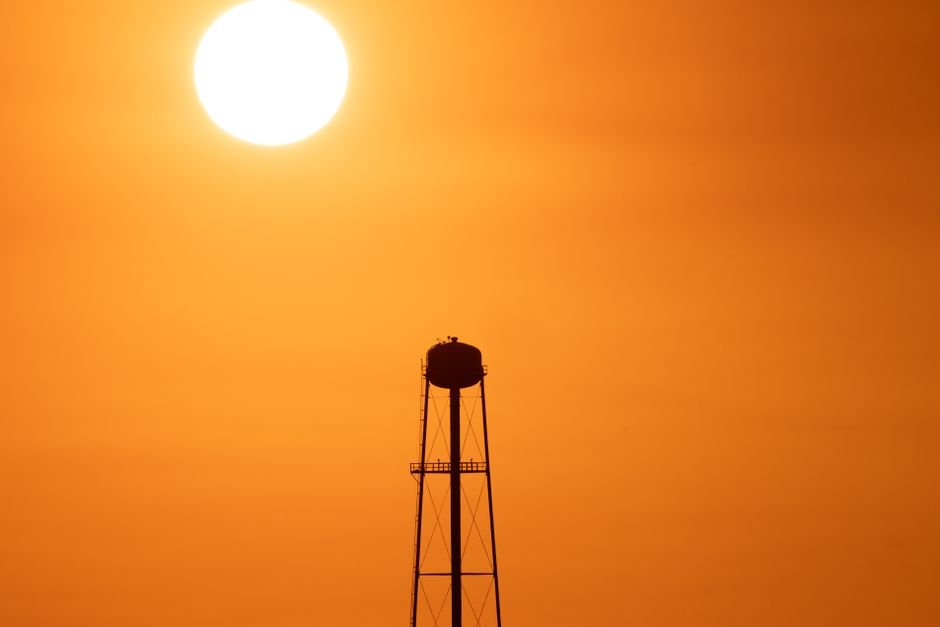
Extreme heat events have expanded into spring and fall across half of the world since the 1980s, according to new research published in AGU Advances. This shift represents a fundamental change in how dangerous temperatures distribute themselves across the year—and it poses serious risks that our public health infrastructure isn’t prepared to handle.
The Pattern: Asymmetrical Expansion, Not Uniform Warming
Across roughly half of the world’s land, the extreme heat season has grown longer since the 1980s, and it grew unevenly, pushing into fall in some regions and into spring in others. What makes this finding particularly significant is that in most of the world, a simple rise in average temperature can’t account for which side grew faster.
In the western U.S., eastern China, northern Africa, and eastern Europe, extreme heat became more common and more rapid in the two months after summer. Meanwhile, in western Europe, southern Africa, and northwestern India, extreme heat came predominantly in the two months before their traditional peak seasons. This lopsided expansion suggests regional factors—moisture patterns, land use changes, and large-scale weather systems—are playing roles alongside global warming.
Phoenix: A Cautionary Case Study
Phoenix, Arizona illustrates the severity of these changes. The city of Phoenix recorded 183 extreme heat days by temperature in the baseline decade of the 1980s, and 338 in the decade ending in 2024. More striking than the quantity is the timing shift: the median date of the city’s dry heat extremes moved 10 days later in the year, while its humid heat extremes moved 5.5 days earlier.
None of the 1980s events fell after the heat season had ended; between 2015 and 2024, 6 percent did. This means dangerous heat is now regularly extending into October and early November. After 113 consecutive days above 100°F in 2024, the city went on to tie or break daily temperature records 21 days in a row from late September into mid-October. The consequences were devastating: Maricopa County, where Phoenix is located, had 608 heat-related deaths in 2024.
Why Timing Matters More Than Total Heat
Extreme heat can be especially dangerous when it arrives before people have had a chance to acclimate—or lingers after they’ve already endured months of scorching temperatures. A 95-degree day in April catches the body unprepared; the same temperature in October assaults a body already exhausted from a brutal summer.
It can also catch communities off guard. Cooling centers, heat alerts, and other protections are typically designed around a summer calendar, leaving people vulnerable when dangerous heat arrives outside those anticipated windows. Cities have budgeted emergency resources for June through August, not for May or October.
How Climate Change Shifts the Probability Curve
Global warming has contributed to the severity and probability of 82 percent of record-hot days globally. The mechanism isn’t mysterious: when average temperatures rise globally, the entire distribution of daily temperatures shifts upward. This means extreme heat days become more frequent simply as a mathematical consequence.
Global warming has amplified the intensity, duration and frequency of extreme heat and heat waves. For the 2024-2025 period alone, people around the world experienced, on average, 41 extra days of dangerous heat in 2024 due to human-caused warming.
The Broader Seasonal Transformation
These heat expansions are part of a larger seasonal reshuffling. Summer weather conditions in midlatitude regions have lengthened by roughly six days per decade since 1990. Spring and fall are compressing—the seasons that used to provide natural cooling periods are shrinking.
As Earth continues to warm, summers will get longer. Looking at the end of the 21st Century, we are likely going to have about six months, half a year of summer. This isn’t climate projection—it’s already underway.
What Needs to Change
The research makes clear that our emergency response systems require overhaul. Heat alerts can’t be confined to three summer months. Cooling centers need to operate on extended calendars. Medical systems need to prepare for heat stress surges in spring when bodies haven’t adapted and in fall when multiple months of strain have depleted resilience.
Perhaps most urgently, we need to reckon with what dangerously hot springs and falls mean for the basic rhythm of human life. April heat waves that bring temperatures within shouting distance of summer highs aren’t anomalies—they’re increasingly normal features of our climate.

Contributor at AskQustion.




Leave a Comment